St Laurence's CE Primary School
Spring Term
Maths
This term in mathematics, we will be building on the children’s existing knowledge of multiplication and division, length and perimeter, fractions, and mass and capacity. Following the White Rose Maths approach, lessons are carefully structured to develop confidence, fluency, and a secure understanding of key concepts.
Children will deepen their learning through the use of manipulatives and practical resources, allowing them to explore ideas concretely before moving on to pictorial and abstract representations. Pupils will have free access to a range of resources to support their learning and to help them explain their thinking in different ways.

English
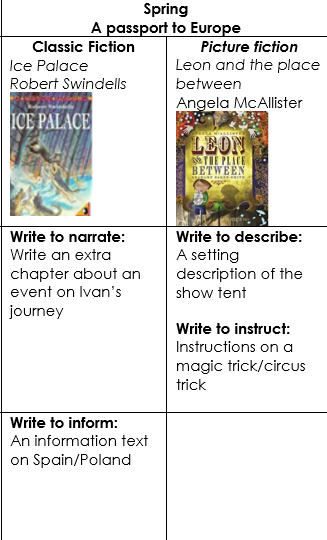
This term in English, our learning will be based around the theme “A Passport to Europe.” We will be exploring a range of high-quality texts, including the classic fiction novel The Ice Palace by Robert Swindells and the picture fiction text Leon and the Place Between by Angela McAllister.
Through these texts, pupils will develop their reading comprehension, vocabulary, and writing skills. Writing outcomes will include:
-
Narrative writing – writing an additional chapter about an event on Ivan’s journey
-
Descriptive writing – creating a detailed description of the show tent
-
Instruction writing – writing clear instructions for a magic or circus trick
-
Informative writing – producing an information text about Spain or Poland
Children will be encouraged to plan, draft, edit, and improve their work, with opportunities to discuss ideas, develop language choices, and build confidence as writers.
Geography
This term in geography, the children will be learning through the theme “A Passport to Europe.” Children will develop their place knowledge by exploring countries within Europe, with a particular focus on Spain and Poland.
Through this unit, pupils will:
-
Locate countries and cities on maps and globes
-
Use atlases, digital maps, and aerial photographs to explore places
-
Develop an understanding of both human and physical geography, including cities, landmarks, rivers, mountains, climate, and tourism
-
Compare similarities and differences between European countries
Children will investigate key geographical features such as capital cities, coastlines, and major landmarks, as well as learn how climate affects the way people live. They will also explore how we can look after the environment when visiting different countries, including the importance of sustainable travel choices.
Throughout the unit, the children will build and apply geographical skills such as map reading, interpreting data, and using subject-specific vocabulary to discuss and explain their learning.
Science
This term in science, the children will be exploring a range of topics across chemistry and physics, helping them to develop curiosity, scientific vocabulary, and practical investigation skills.
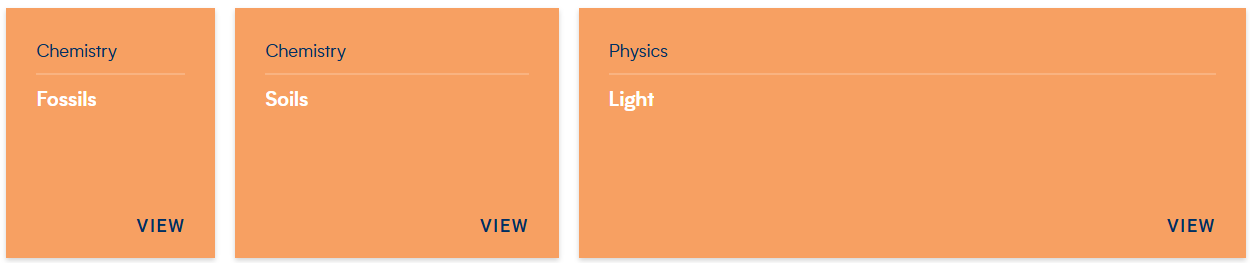
In chemistry, children will learn about fossils, discovering how they are formed and what they can tell us about the past. They will also study soils, exploring the different types of soil, their properties, and how they are formed.
In physics, the children will investigate light, learning how light travels, how we see objects, and how shadows are formed. Children will take part in practical activities and investigations to ask questions, make predictions, and record their findings.
Throughout the unit, the children will be encouraged to work scientifically by observing closely, carrying out simple tests, using equipment safely, and explaining their ideas using appropriate scientific language.